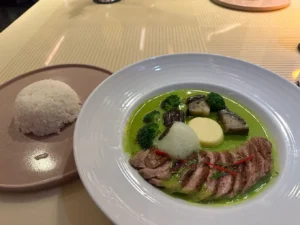
Ordering food in a new country can sometimes feel complicated, especially when you are unfamiliar with the language, ingredients, menu format, or dining customs.
Thailand is no different.
Thai menus can include unfamiliar dishes, ingredients, sauces, herbs, and spice levels. Some restaurants may also offer dishes that are very different from what you are used to ordering at home.
The good news is that ordering food in Thailand becomes much easier once you understand a few basic principles.
You do not need to know every Thai dish before sitting down at a restaurant.
Start with ingredients you recognize, ask questions when necessary, and don’t be afraid to explain your preferences.
Whether you’re visiting Bangkok for the first time or simply want to become more comfortable ordering Thai food, these tips can help.
1. Look at the Menu Before Ordering
The first step is simple: take your time with the menu.
Thai restaurants can offer a large selection of dishes, from noodles and rice dishes to curries, soups, salads, seafood, grilled food, desserts, and drinks.
If you are unfamiliar with Thai cuisine, don’t feel pressured to order immediately.
Look for dishes containing ingredients you already enjoy.
For example, if you like seafood, look for prawns, squid, fish, or other seafood dishes.
If you prefer meat, look for chicken or beef options.
If you enjoy rice or noodles, use those as your starting point.
Understanding the different types of Thai food can also make a menu much easier to navigate.
2. Check Whether the Dish Is Spicy
This is one of the most useful things to ask when ordering Thai food.
Some Thai dishes contain very little chili, while others can be quite spicy.
Don’t assume that a dish is mild simply because it doesn’t look spicy on the menu.
Ask about the spice level before ordering.
If you prefer mild food, explain that you don’t want much chili.
If you enjoy spicy food, you can ask which dishes have more heat.
Our guide to mild Thai food in Bangkok is also useful if you want to explore Thai cuisine without focusing on very spicy dishes.
3. Tell the Restaurant About Dietary Restrictions
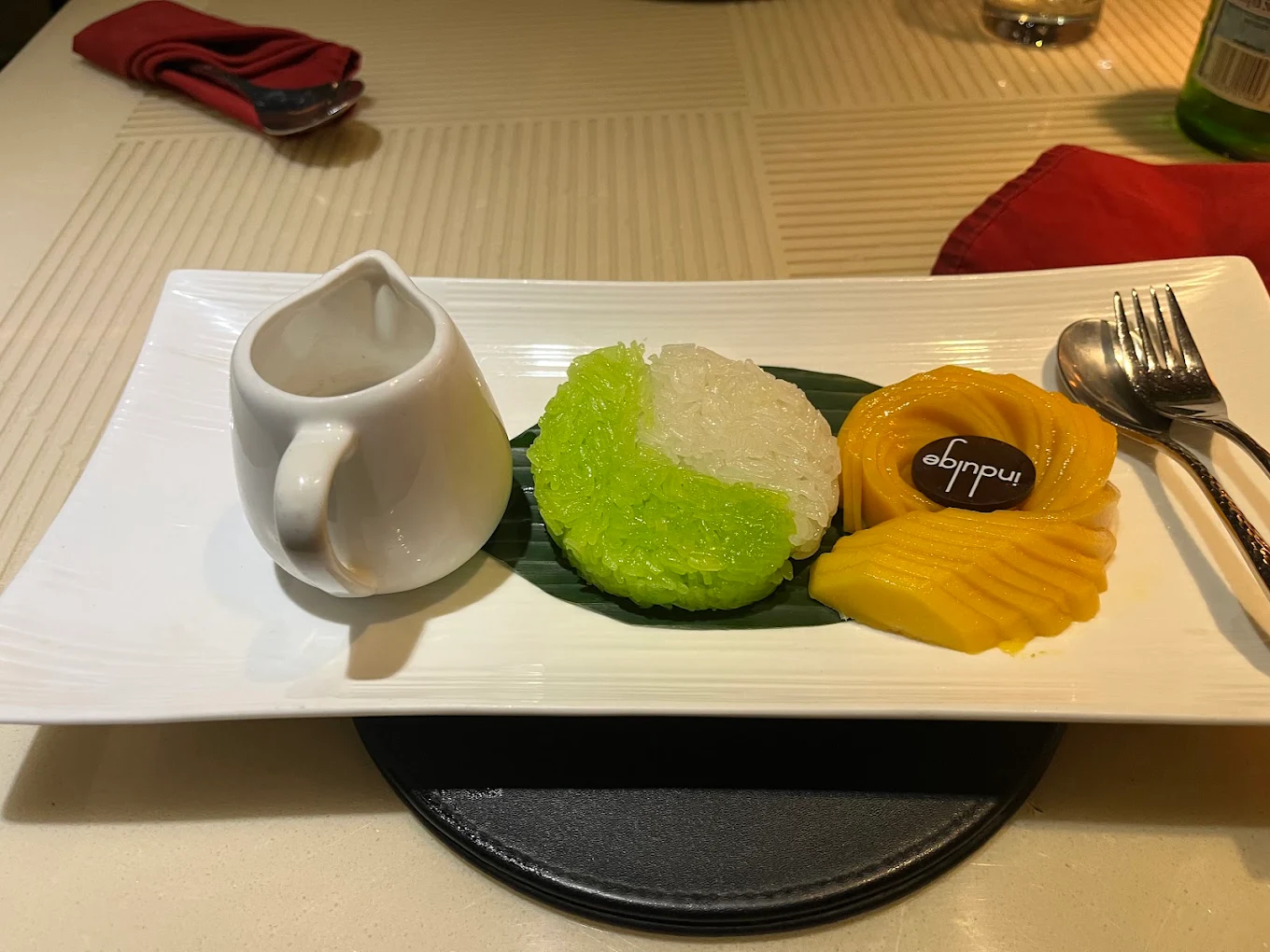
If you have a food allergy, intolerance, or dietary restriction, communicate it clearly before ordering.
Don’t rely solely on the appearance or name of a dish.
Some sauces and pastes may contain ingredients that aren’t immediately obvious.
For example, a dish that appears to be vegetable-based may contain fish sauce, shrimp paste, or another animal-derived ingredient.
Vegetarian and vegan diners should therefore confirm the ingredients and preparation method with the restaurant.
Our guide to vegetarian Thai dishes provides a useful starting point for exploring meat-free Thai cuisine.
4. Don’t Be Afraid to Ask What Is in a Dish
If you don’t recognize a dish, ask.
You can ask whether it contains:
- Chicken
- Beef
- Seafood
- Vegetables
- Coconut milk
- Chili
- Fish sauce
- Peanuts
- Other ingredients you avoid
This is much better than ordering something based solely on its name and hoping it matches your preferences.
Restaurant staff can often explain the main ingredients or recommend alternatives.
5. Start With Familiar Ingredients
If this is your first time trying Thai food, familiar ingredients can make the experience easier.
You might choose:
Chicken + rice
Beef + rice
Seafood + noodles
Vegetables + rice
Noodles + a protein you already enjoy
Once you become more comfortable with Thai flavors, you can experiment with less familiar ingredients.
If you are a particularly cautious eater, our guide to eating in Thailand as a picky eater has additional suggestions.
6. Understand That Thai Meals Can Be Shared
Thai dining often works particularly well for groups.
Instead of every person ordering one large dish, a group can choose several dishes and share them.
This gives everyone the opportunity to try different flavors.
For example, one person might choose a curry, another might order seafood, and someone else might choose a noodle dish.
Sharing also makes it easier to experiment.
If you don’t like one dish, you still have several other options on the table.
This is particularly useful when dining with friends or family.
At Indulge, the Starters & Sharing section includes dishes designed to be enjoyed together.
7. Learn a Few Useful Thai Food Words
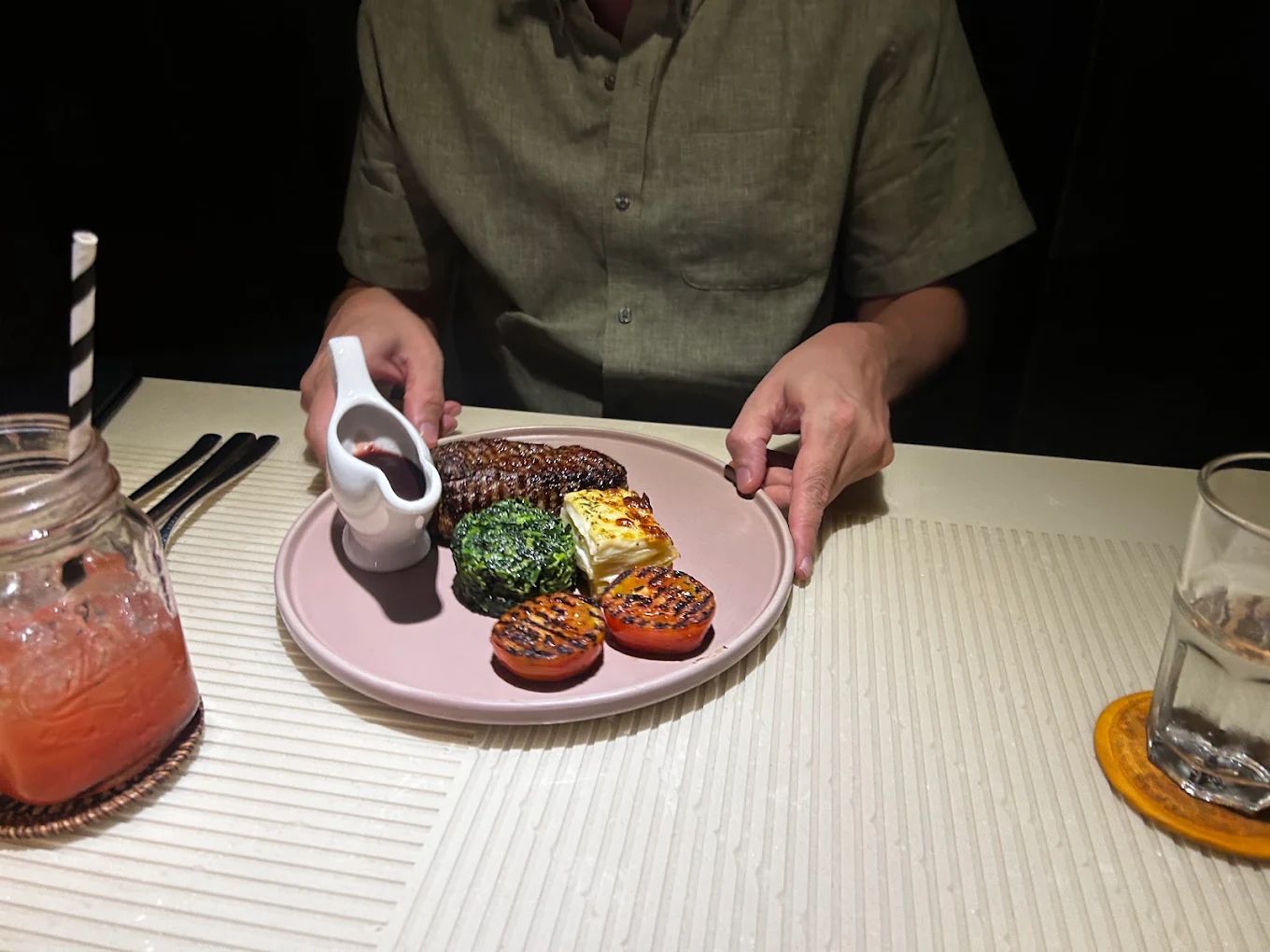
You don’t need to become fluent in Thai to order food.
Learning a few simple food-related words can nevertheless make the experience easier.
For example:
Mai phet — Not spicy
Phet nit noi — A little spicy
Phet mak — Very spicy
Mai sai — Don’t add
However, pronunciation can vary, and gestures or showing the relevant menu item can also help.
If you’re unsure, simply explaining your preference clearly in English may work at restaurants accustomed to international visitors.
8. Choose Your Spice Level Carefully
Thai dishes can vary significantly in heat.
If you enjoy spicy food, you may want to explore some of Thailand’s more chili-forward dishes.
If you are not accustomed to strong heat, start with something milder.
Our guide to spicy Thai dishes explores some of the dishes where chili plays a more prominent role.
For people specifically interested in very hot dishes, explore our guide to hot Thai dishes.
9. Understand the Difference Between Curry Types
Thai curry can refer to many different preparations.
Green curry, red curry, panang curry, massaman curry, and southern Thai curries can all have different flavors, textures, and levels of heat.
Some are rich and creamy.
Others are more intensely spicy or aromatic.
If you’re ordering curry for the first time, ask the restaurant to describe it if you’re unsure.
At Indulge, the Red Curry River Prawn combines river prawns with Thai red curry and eggplant.
10. Rice Is Often Part of the Meal
Rice is a fundamental part of Thai cuisine.
Depending on the dish, rice may be served separately or incorporated into the meal.
Jasmine rice is commonly served with many Thai dishes, while sticky rice has an important role in northern and northeastern Thai cuisine.
If you order a strongly flavored curry or other dish, rice can provide a neutral base that balances the stronger flavors.
11. Noodles Are Another Easy Starting Point
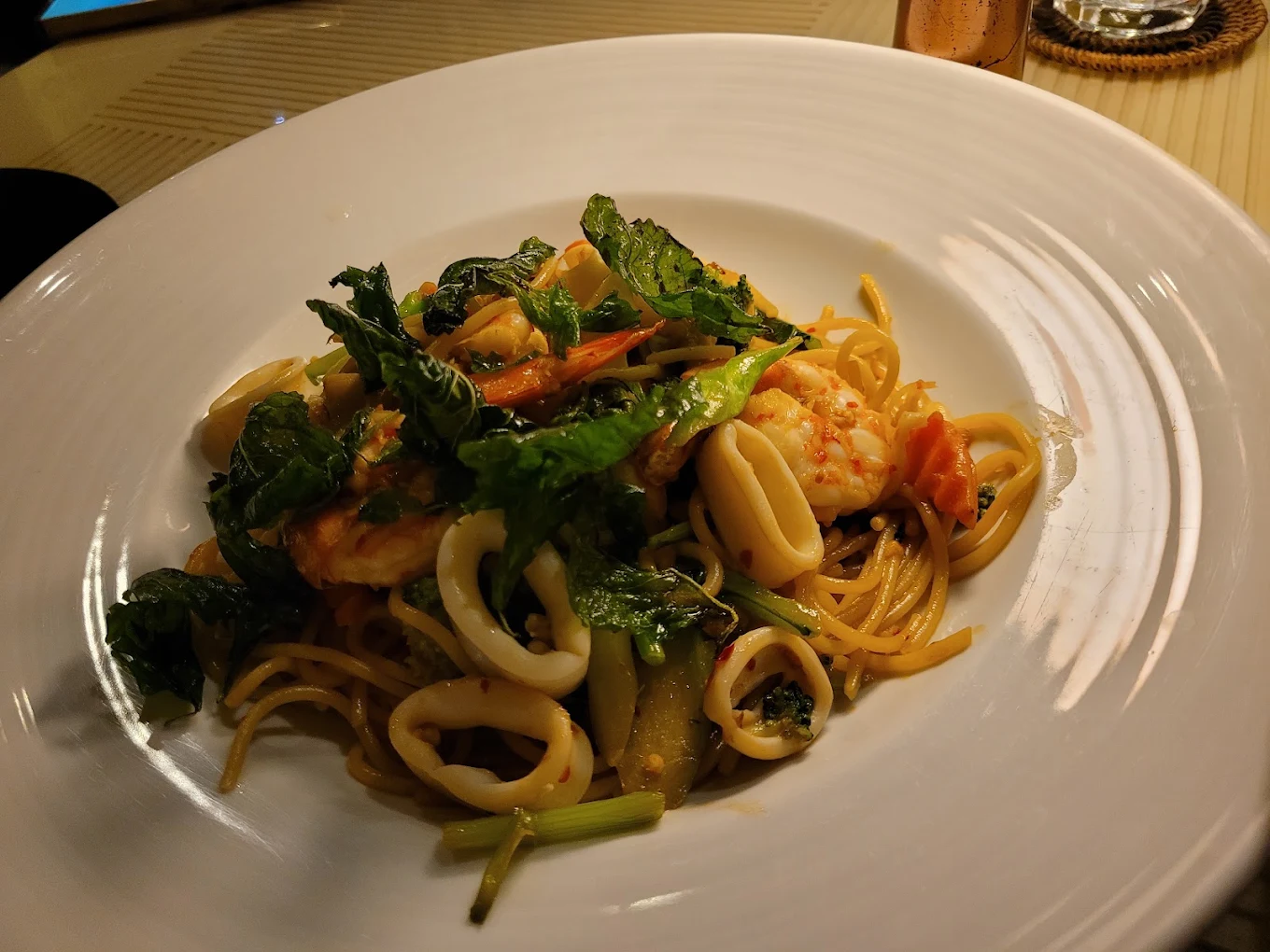
Noodle dishes can be particularly approachable for visitors who are new to Thai food.
Thailand has a wide range of noodle preparations, including stir-fried noodles and noodle soups.
Pad Thai is internationally famous, but it is only one example of Thailand’s noodle traditions.
Modern Bangkok restaurants also experiment with Thai-inspired noodle dishes.
At Indulge, Spaghetti Khe Mao Seafood combines spaghetti with Thai-inspired flavors, prawns, squid, and clams.
12. Don’t Judge a Dish by Its Name Alone
Some Thai dish names may not tell you everything about what you are going to receive.
A dish may sound unfamiliar but contain ingredients you already enjoy.
Conversely, a familiar-sounding dish may include flavors or ingredients you don’t expect.
This is why asking questions can be more useful than relying solely on the name.
Look at the ingredients, ask about preparation, and explain what you like.
13. Consider How the Dish Is Cooked
The cooking method can make a significant difference.
Thai restaurants may offer dishes that are:
- Stir-fried
- Grilled
- Steamed
- Fried
- Simmered
- Cooked in curry
- Served fresh
If you prefer lighter preparations, grilled or steamed options may appeal to you.
If you enjoy richer or crispier food, fried or coconut-based dishes may be more suitable.
Knowing the cooking method can help you make a more informed choice.
14. Explore Different Thai Flavor Profiles
Thai cuisine is known for combining contrasting tastes.
Sweet, sour, salty, spicy, and bitter flavors can all appear in different combinations.
For example, lime can provide sourness, chili adds heat, and fish sauce contributes saltiness and savory depth.
If you want to understand this balance before ordering, read our guide to the five flavors of Thai food.
15. Don’t Forget About Desserts
Thai desserts offer another way to explore the country’s food culture.
Coconut, sticky rice, mango, tropical fruit, and palm sugar are common ingredients in Thai sweets.
Mango sticky rice is perhaps the most internationally recognizable example.
If you prefer sweet flavors to spicy dishes, dessert can be an easy part of the meal to explore.
At Indulge, you can also browse the Desserts section after your meal.
16. Choose Drinks That Suit Your Meal
Drinks can also form an important part of a dining experience.
Thai-inspired drinks may use ingredients such as citrus, herbs, and tropical fruits.
At Indulge, the Drinks menu offers cocktails and other beverages that can be enjoyed alongside the food.
17. Ordering Food at a Modern Bangkok Restaurant
Not every Bangkok restaurant focuses exclusively on traditional Thai cuisine.
Many contemporary restaurants combine Thai ingredients and flavors with international dishes.
This can be useful for groups where everyone has different preferences.
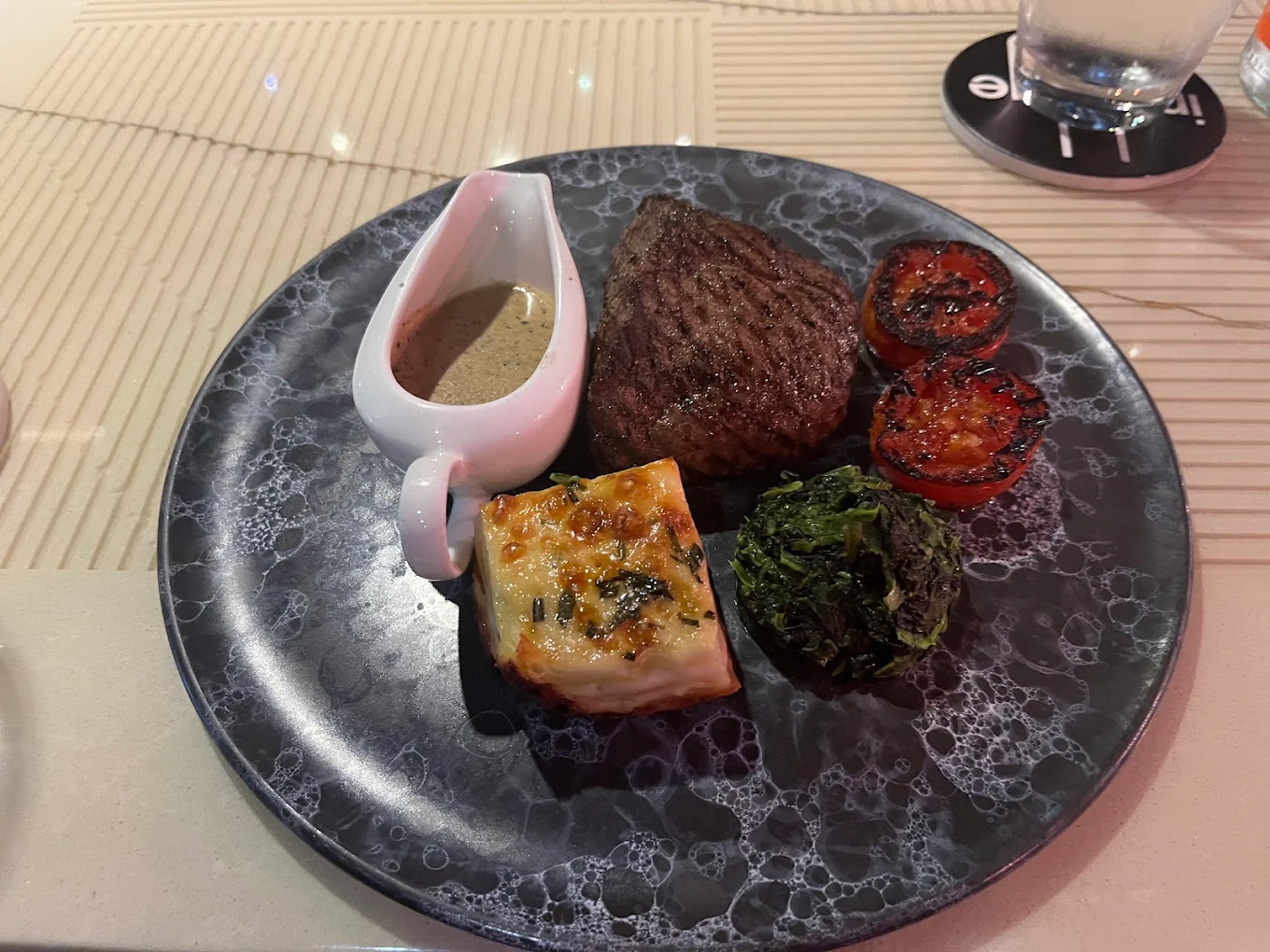
At Indulge Fusion Food & Cocktail Bar, for example, the menu combines Thai-inspired dishes with seafood, steaks, burgers, pasta, comfort food, sharing plates, desserts, and drinks.
This gives diners more flexibility when ordering.
Someone can explore a Thai-inspired dish while another guest chooses an international favorite.
What to Order at Indulge
If you’re visiting Indulge and want to explore Thai-inspired flavors, the Signature Mains section is a good place to start.
The Basil Leaf Kra Phao with Rib Eye Beef combines rib-eye beef with Thai basil, garlic, chili, jasmine rice, and a fried egg.
The Red Curry River Prawn offers another Thai-inspired option, combining river prawns with red curry and eggplant.
For groups, you can start with dishes from Starters & Sharing before moving to the main course.
A Simple Ordering Strategy for First-Time Visitors
If you are unsure what to order, follow this simple approach:
Step 1: Pick a familiar ingredient
Choose chicken, beef, seafood, vegetables, rice, or noodles.
Step 2: Check the spice level
Ask whether the dish is spicy and explain your preference.
Step 3: Ask about unfamiliar ingredients
Especially if you have dietary restrictions.
Step 4: Choose one dish you recognize
This gives you a safe starting point.
Step 5: Add something new
Try one unfamiliar dish or ingredient.
Step 6: Share when possible
This lets you taste several dishes without committing to a large portion.
What to Do If You Don’t Like Your Dish
Don’t worry if something you order isn’t what you expected.
Thai cuisine has a huge range of flavors and ingredients.
You can try something different at your next meal.
If you’re dining with a group, sharing also means there may already be several other dishes available.
The goal of exploring Thai food is not to enjoy every dish immediately.
It’s to gradually discover the flavors and ingredients that suit you.