Thai cuisine is now enjoyed around the world, but the food served in Thailand today has developed over centuries.
Its familiar combination of fresh herbs, chilies, aromatic spices, rice, noodles, seafood, vegetables, coconut, and sauces reflects a long process of culinary development.
The history of Thai cuisine is therefore not the story of one particular cooking tradition.
It is the story of different regional food cultures, local ingredients, trade, migration, cultural exchange, and changing cooking techniques coming together over time.
Understanding this history can make familiar Thai dishes even more interesting.
A bowl of noodles, a curry, a spicy salad, or a plate of rice represents more than a collection of ingredients. Each belongs to a broader culinary tradition that has continued to change from generation to generation.
Where Did Thai Cuisine Come From?
There is no single moment when Thai cuisine was created.
Food traditions developed gradually as communities in what is now Thailand cultivated crops, traded with neighboring regions, adapted local ingredients, and developed their own cooking methods.
Rice became central to everyday meals, while vegetables, herbs, freshwater fish, seafood, meat, fruits, and aromatic plants provided variety.
Over time, different regions developed their own approaches to cooking.
This is why northern Thai food can taste very different from southern Thai cuisine, even though both are part of the broader Thai culinary tradition.
Our Regional Thai Food Guide explores these regional differences in more detail.
Rice and the Foundations of Thai Food
Rice has played a central role in Thai food culture for centuries.
Different varieties and preparations developed according to local agricultural conditions and regional traditions.
Fragrant jasmine rice became particularly associated with central and northeastern parts of Thailand, while sticky rice has a particularly important role in northern and northeastern cuisine.
Rice also provides an important balance to strongly flavored dishes.
A spicy curry, salty stir-fry, or aromatic soup can be eaten alongside rice, creating a meal in which the different components complement one another.
Rice is also used to create noodles, desserts, snacks, and other preparations.
This versatility helps explain why it remains such an important foundation of Thai cuisine.
The Influence of Trade and Cultural Exchange
Thai cuisine did not develop in isolation.
Thailand has long been connected to neighboring regions through trade, migration, and cultural exchange.
These interactions introduced new ingredients, techniques, and culinary ideas.
Over time, ingredients that may once have been unfamiliar became incorporated into local cooking.
This is one reason it can be difficult to describe Thai cuisine as completely separate from the cuisines of surrounding regions.
Food traditions naturally move across borders.
Chefs and home cooks adapt ingredients according to what is available, and dishes change as they are introduced to new communities.
The result is a cuisine that continues to evolve while retaining strong local characteristics.
Chinese Influence on Thai Cuisine
Chinese culinary influence has played an important role in the development of food in Thailand.
Migration and trade helped introduce cooking techniques and food traditions that eventually became integrated into Thai cooking.
Noodles, stir-frying, certain dumpling traditions, and different methods of preparing food in a wok are examples of techniques and food styles that became part of Thailand’s broader culinary landscape.
Today, dishes influenced by Chinese cooking are so familiar that their historical connections may not always be obvious.
This is an important reminder that the history of Thai food is also a history of cultural exchange.
Indian and Spice Influences
South Asian culinary traditions also contributed influences to Thai cuisine, particularly through spices, curry traditions, and religious and cultural exchange.
Thai curries developed their own identities rather than simply reproducing Indian curry recipes.
Thai curry pastes typically use a distinctive combination of local herbs, chilies, aromatics, and spices.
Ingredients such as lemongrass, galangal, kaffir lime leaves, garlic, chilies, and coriander contribute characteristics that make Thai curries recognizably Thai.
This is an excellent example of how culinary influence can lead to adaptation rather than simple imitation.
European Influences and New Ingredients
European contact also introduced ingredients and culinary influences that eventually became part of Thai food culture.
Tomatoes and chilies, for example, became important ingredients in many Thai dishes despite not originating in Southeast Asia.
Chili in particular is now so closely associated with Thai cuisine that it can be surprising to learn that it was introduced to the region through global trade.
Over time, local cooks incorporated new ingredients into existing cooking traditions.
The ingredients changed, but the resulting dishes became part of Thai culinary identity.
This is one of the clearest examples of how cuisine evolves.
The Development of Thai Curry
Thai curry is one of the best examples of this evolution.
There are many types of Thai curry, and recipes vary according to region and household.
Green curry, red curry, massaman curry, panang curry, and southern curry preparations all have different characteristics.
Curry pastes are particularly important.
They can contain combinations of chilies, garlic, shallots, lemongrass, galangal, coriander roots, spices, and other ingredients.
Coconut milk is frequently used in central Thai curry preparations, creating a rich texture and helping balance the heat and aromatic ingredients.
But not every Thai curry is coconut-based.
Regional traditions demonstrate how varied Thai curry can be.
If you want to explore the dishes themselves, our guide to traditional Thai dishes provides a useful next step.
How Thai Flavor Profiles Developed
Thai cuisine is often associated with the balance of sweet, sour, salty, spicy, and bitter flavors.
These tastes are not necessarily present in equal amounts in every dish.
Instead, cooks adjust different ingredients to create the desired balance.
Lime and tamarind can add acidity.
Palm sugar can contribute sweetness.
Fish sauce and other seasonings provide saltiness and savory depth.
Chilies add heat.
Herbs and spices contribute aroma.
Understanding this balance helps explain why Thai food can taste complex even when a dish contains relatively few main ingredients.
For a deeper look at this subject, read our guide to the five flavors of Thai food.
The Importance of Thai Herbs and Aromatics
Thai cuisine would be very different without its herbs and aromatic ingredients.
Lemongrass, galangal, Thai basil, kaffir lime leaves, garlic, coriander, turmeric, and chilies all contribute distinctive aromas and flavors.
These ingredients are often combined rather than used individually.
A soup might use lemongrass, galangal, kaffir lime leaves, and chili.
A curry paste may combine several aromatics with spices and chilies.
A stir-fry may use garlic, Thai basil, and chili.
This layering of aromas is one of the defining characteristics of Thai cooking.
If you want to explore one of these ingredients more closely, our article on lemongrass in Thai cuisine provides a deeper look.
Regional Thai Cuisine
The history of Thai cuisine cannot be separated from regional food traditions.
Thailand’s geography, climate, agriculture, and cultural connections have all influenced the way people cook and eat.
Northern Thai Cuisine
Northern Thai food has its own traditions and flavor profiles, influenced partly by the region’s geography and historical connections with neighboring areas.
Northeastern Thai Cuisine
Isan cuisine is known for strong flavors, fresh herbs, chili, fermented ingredients, grilled foods, and dishes such as Som Tam.
Sticky rice is also particularly important in the region.
Central Thai Cuisine
Central Thai cuisine includes many dishes that have become internationally recognized as Thai food.
Curries, soups, stir-fries, rice dishes, and other preparations form part of this diverse culinary tradition.
Southern Thai Cuisine
Southern cuisine is known for strong use of chili, herbs, seafood, and intensely flavored curry preparations.
The differences between these regions demonstrate that there is no single definition of traditional Thai food.
Thai Food Continues to Change
Thai cuisine is not frozen in history.
Just as earlier generations adapted ingredients and cooking techniques, modern chefs continue to experiment.
Contemporary restaurants may use traditional Thai ingredients in new formats or combine Thai flavors with international cooking techniques.
This is particularly visible in Bangkok.
The city has become a major international dining destination where traditional Thai cooking exists alongside Japanese, Chinese, European, Indian, and contemporary fusion cuisine.
Our Fusion Food in Bangkok article explores how different culinary traditions can be combined in modern dining.
From Traditional Food to Modern Thai Dining
The evolution of Thai cuisine does not mean traditional food has disappeared.
Instead, traditional dishes and ingredients continue to provide the foundation for modern interpretations.
A chef might use a familiar Thai curry paste with a different protein.
A classic Thai flavor combination might be incorporated into pasta.
Thai herbs can appear in contemporary cocktails.
A traditional dish can also be presented using modern techniques.
These approaches allow Thai cuisine to remain connected to its history while continuing to develop.
Thai Cuisine in Contemporary Bangkok

Bangkok provides a good example of this combination of tradition and innovation.
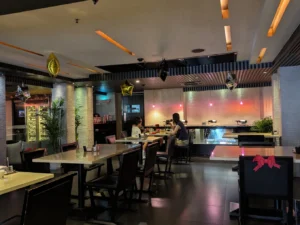
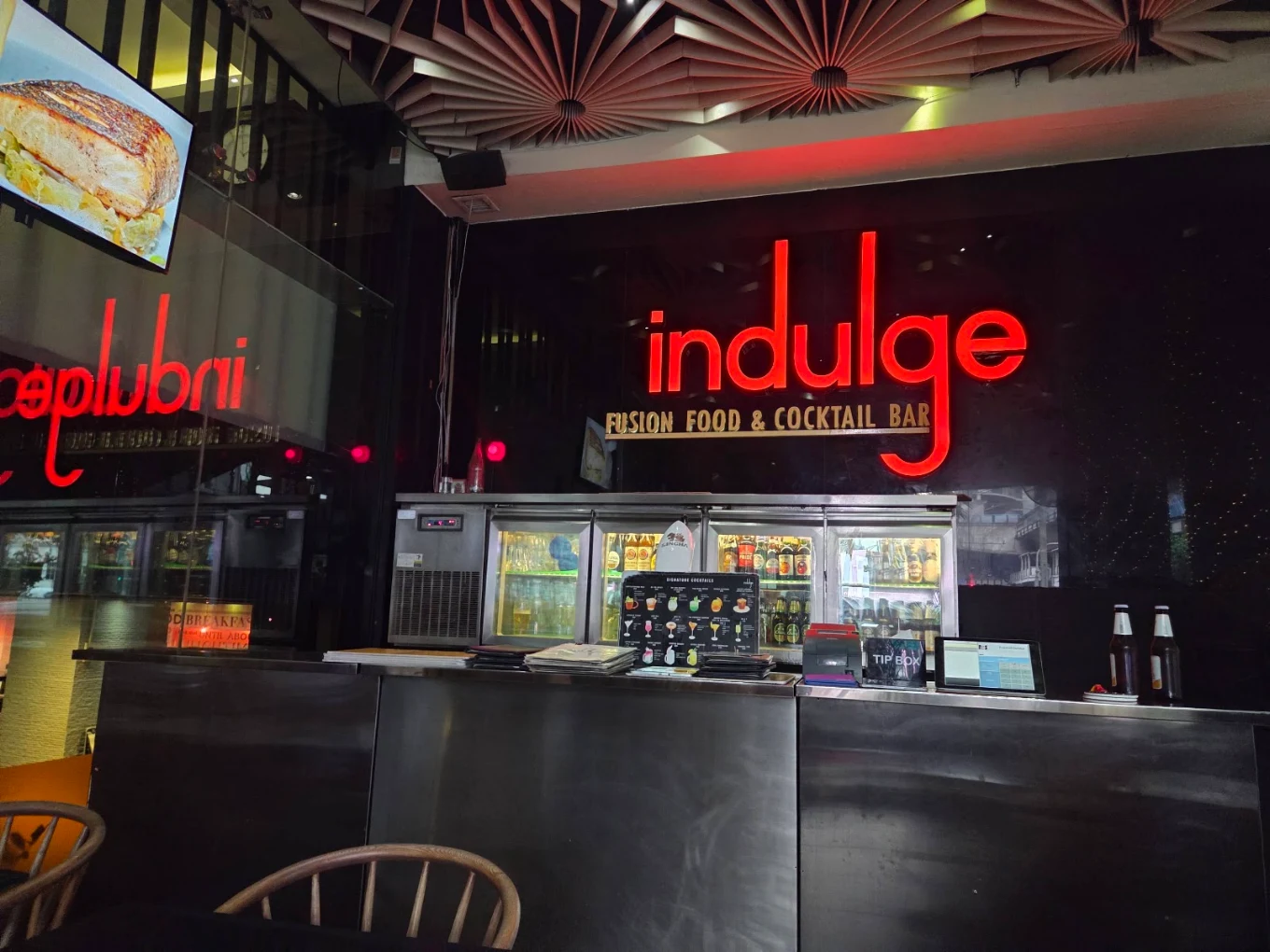
At Indulge Fusion Food & Cocktail Bar, Thai-inspired dishes appear alongside international food, seafood, premium meats, pasta, burgers, sharing plates, desserts, and drinks.
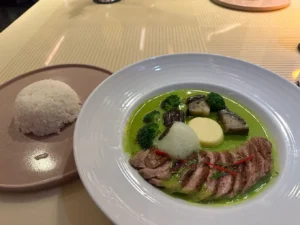
The menu includes dishes such as Basil Leaf Kra Phao with Rib Eye Beef, combining Thai basil, garlic, chili, jasmine rice, and fried egg with rib-eye beef.
The Red Curry River Prawn combines river prawns with spicy Thai red curry and eggplant confit.
These dishes use recognizable Thai flavors while presenting them within a contemporary restaurant menu.
Thai-Inspired Fusion and Culinary Evolution
Fusion dining is one of the clearest examples of how Thai flavors continue to evolve.
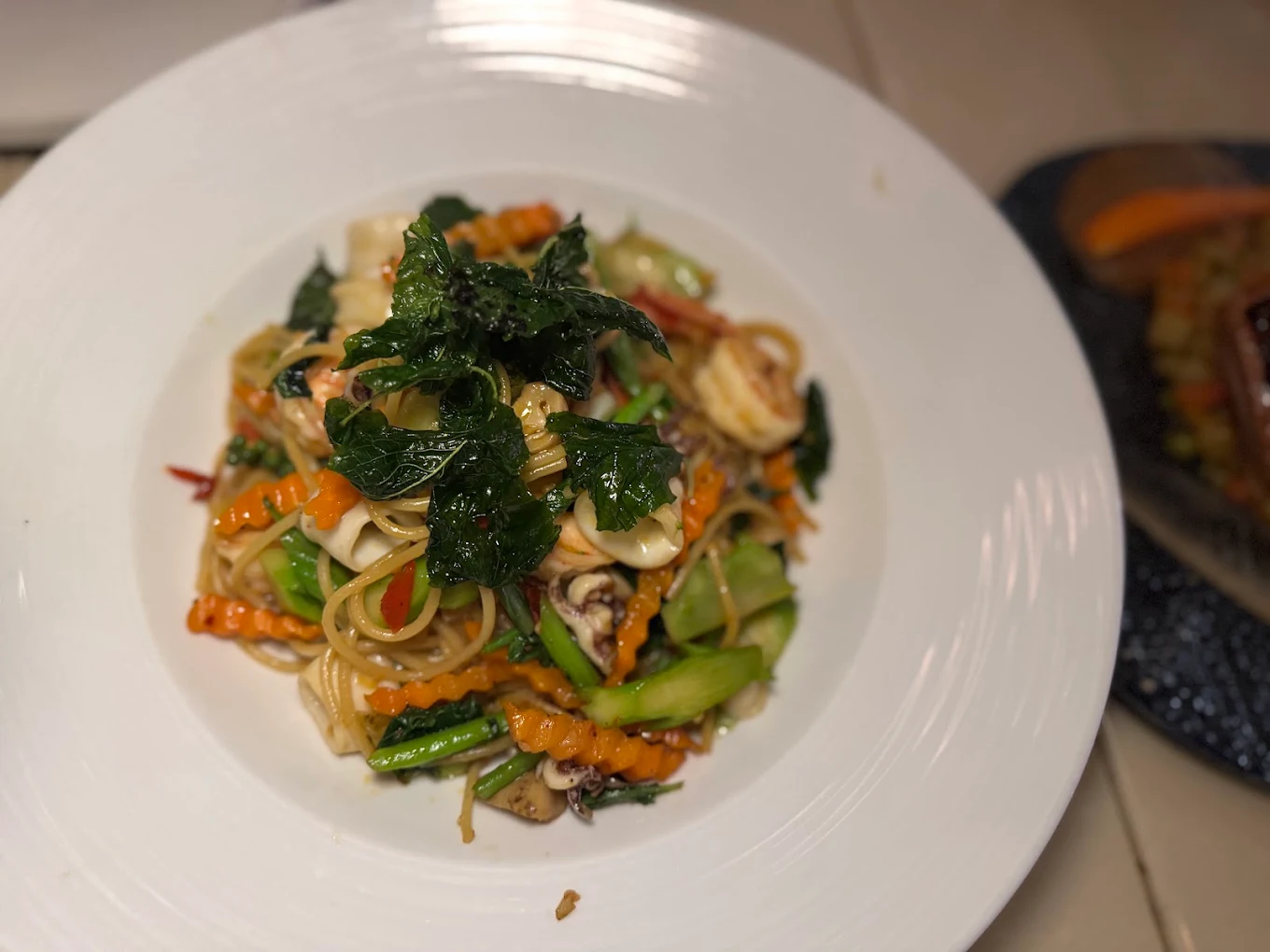
At Indulge, dishes such as Spaghetti Khe Mao Seafood combine a pasta format with Thai-inspired spicy stir-fried flavors, prawns, squid, and clams.
Another example is Papilotte Salmon with tom yum bouillon, which brings a familiar Thai flavor profile into a different preparation.
These dishes are not replacements for traditional Thai recipes.
Instead, they show how Thai ingredients and flavor combinations can be interpreted in contemporary ways.
Thai Food and the Modern Dining Experience
Thai cuisine has also expanded beyond traditional meal formats.
Thai-inspired ingredients now appear in cocktails, desserts, snacks, and international dishes.
At Indulge, for example, Thai ingredients and flavors are incorporated into both food and drinks.
Thai basil, citrus, lemongrass, and other ingredients can create connections between the kitchen and cocktail menu.
Explore the Drinks selection to see the current beverage options.
Why Understanding Thai Food History Matters
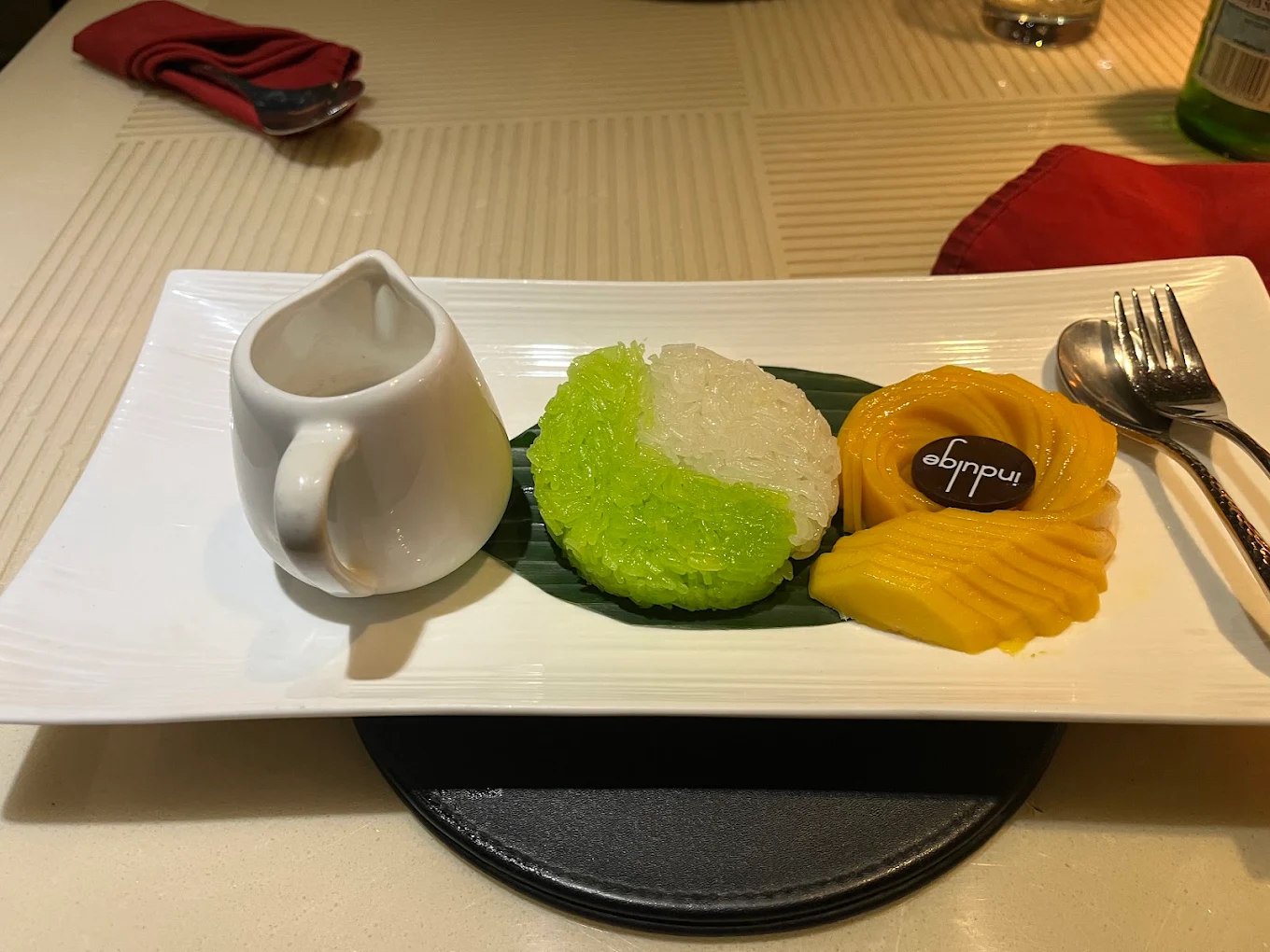
Learning about the history of Thai cuisine changes the way you experience the food.
A curry is no longer simply a spicy sauce.
A noodle dish can reflect centuries of cultural exchange.
An ingredient that seems completely traditional may have traveled across borders before becoming part of everyday Thai cooking.
And modern fusion dishes can be understood as another stage in the same process of culinary adaptation.
Food changes because people change, ingredients move, and cooking traditions interact.
Thai cuisine is a particularly interesting example of this process.
Exploring Thai Cuisine in Bangkok
If you’re visiting Bangkok, exploring Thai food does not have to mean choosing between traditional and modern dining.
Both can be part of the same food experience.
You might begin with traditional Thai dishes, explore regional food, and then try a contemporary restaurant that uses Thai ingredients in a different way.
At Indulge, the broad menu makes this particularly accessible for groups.
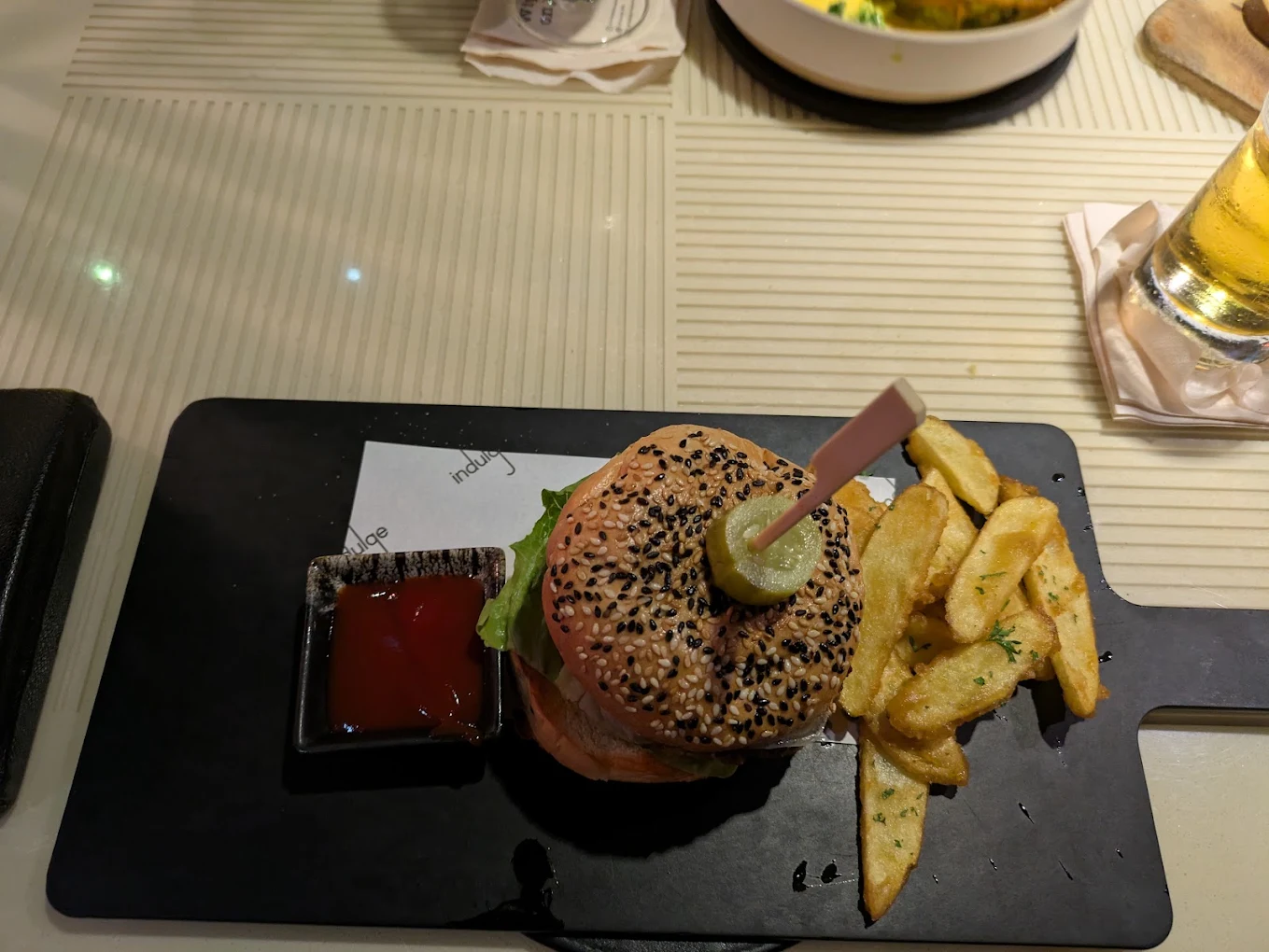
One person can choose a Thai-inspired main while another chooses seafood, steak, pasta, or a burger.
The restaurant also offers Starters & Sharing, allowing groups to try several dishes together.