Bangkok’s food scene is constantly changing.
Traditional Thai cuisine remains an important part of the city’s identity, but Bangkok is also home to restaurants where Thai ingredients, international cooking techniques, and influences from different culinary traditions come together.
This is where fusion food in Bangkok becomes particularly interesting.
Fusion cuisine is not simply about putting two unrelated ingredients on the same plate. When done thoughtfully, it can take familiar flavors and present them in a new format, combine ingredients from different culinary traditions, or introduce a traditional flavor profile to diners in a completely different way.
The idea itself is not new.
Cuisines around the world have developed through centuries of migration, trade, cultural exchange, and experimentation. Modern fusion dining simply makes these connections more visible.
Here are three reasons fusion food continues to have a place in Bangkok’s evolving dining scene.
What Is Fusion Food?
Fusion food brings together elements from different culinary traditions.
That could mean combining ingredients, cooking techniques, sauces, presentation styles, or flavor profiles from different cuisines.
Sometimes the connection is obvious.
A chef might combine a Thai curry with an international ingredient or use a familiar Thai sauce in a dish that traditionally belongs to another cuisine.
Other times, fusion is much more subtle.
A restaurant might use Thai herbs and spices in an otherwise international dish, or take a familiar Thai flavor profile and reinterpret it through a different cooking method.
The key is that fusion cuisine creates a connection between culinary influences.
This makes it particularly relevant to a city such as Bangkok, where traditional food culture exists alongside a highly international restaurant scene.
1. Fusion Food Creates New Flavor Combinations
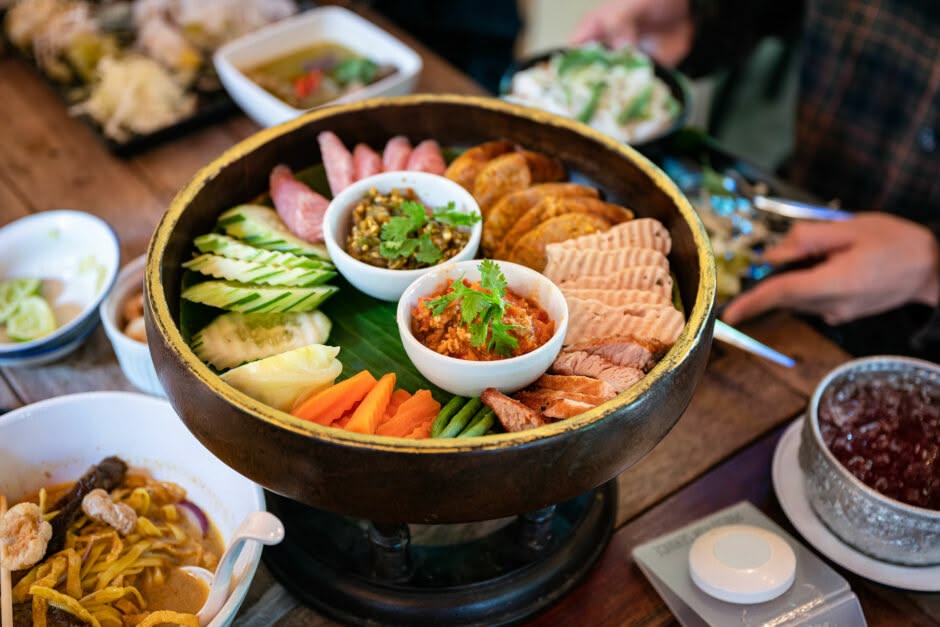
The first reason fusion cuisine continues to attract attention is simple: it creates opportunities for new combinations.
A chef can start with a familiar ingredient and ask how it might work with a different culinary technique or flavor profile.
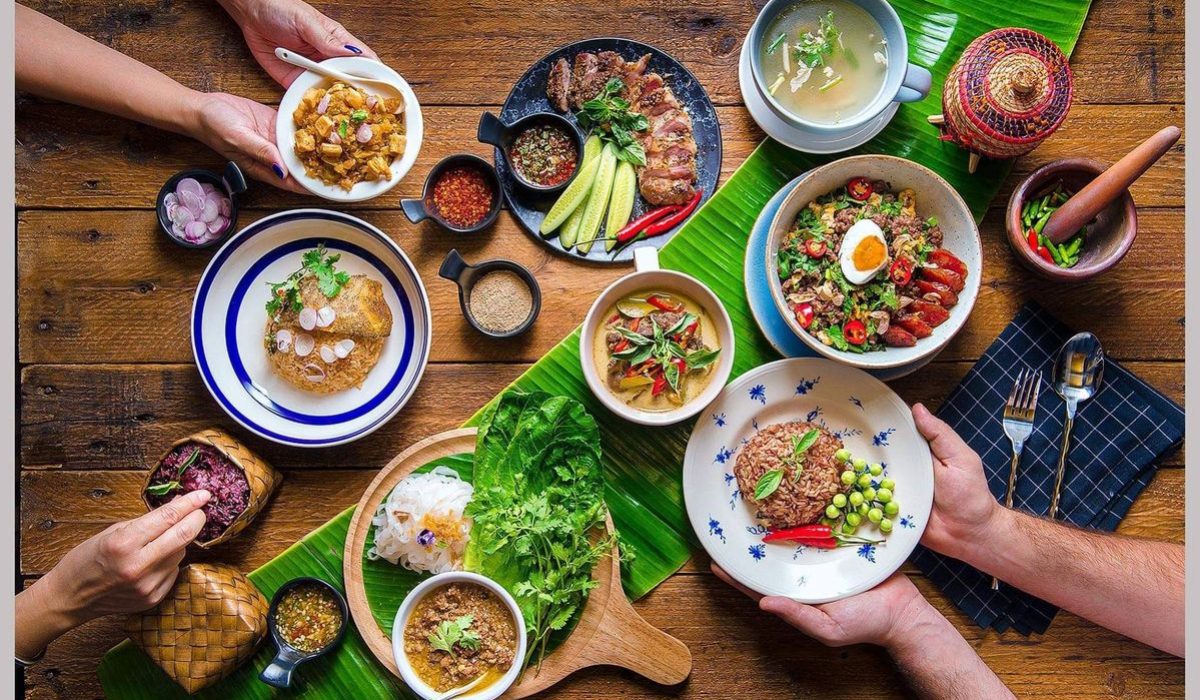
Thai cuisine provides plenty of inspiration.
Thai basil, chili, lemongrass, lime, curry, garlic, tamarind, coconut, and other ingredients already have strong individual identities.
When these flavors are introduced into international dishes, the result can feel familiar and new at the same time.
This is one of the most interesting aspects of fusion food in Bangkok.
You may recognize the flavor immediately, but experience it in a format you did not expect.
Thai Flavors With International Ingredients
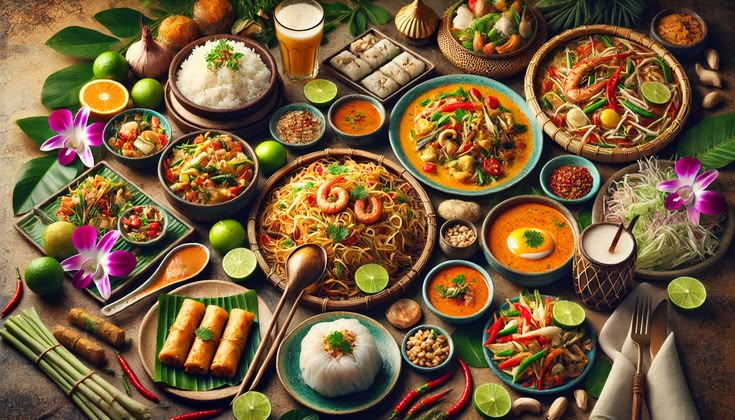
Indulge Fusion Food & Cocktail Bar uses this approach across several dishes on its current menu.
The Basil Leaf Kra Phao with Rib Eye Beef, for example, combines rib-eye beef with Thai basil, garlic, chili, jasmine rice, and a fried egg.
Kra Phao is a familiar Thai flavor profile, but pairing it with rib-eye gives the dish a different direction.
It demonstrates how a recognizable Thai preparation can work with a premium international-style ingredient.
Another example is the Red Curry River Prawn, which combines wild-caught river prawns with spicy Thai red curry and eggplant confit.
Rather than treating Thai red curry as a fixed recipe, the dish uses its flavor profile alongside a premium seafood ingredient.
This type of combination is one reason fusion dining can be interesting for both local diners and international visitors.
2. Fusion Food Brings Different Culinary Cultures Together
Food has always moved across borders.
Ingredients travel.
Cooking techniques are adapted.
Recipes change when they are introduced to new communities.
Over time, these influences can become part of everyday cuisine.
Fusion food makes this exchange particularly visible.
A restaurant can take a familiar local ingredient and introduce it to an international preparation, or use an international ingredient to reinterpret a dish associated with a particular region.
This is particularly relevant in Bangkok because the city attracts people from around the world.
Restaurants therefore have an opportunity to serve diners who may be familiar with completely different culinary traditions.
Fusion cuisine can provide a point of connection.
A visitor might recognize the ingredients or cooking style of their home country while also discovering Thai flavors they have never experienced before.
Fusion Doesn’t Mean Losing the Original Identity
There is an important difference between simply mixing ingredients and creating a thoughtful fusion dish.
The strongest fusion dishes still have a recognizable idea behind them.
Thai ingredients should not disappear beneath unrelated flavors.
Likewise, an international cooking technique should contribute something meaningful rather than being used simply because it sounds different.
This is why understanding the original cuisine matters.
A chef working with Thai ingredients needs to understand how those ingredients traditionally interact.
Knowing how chili, lime, basil, garlic, curry paste, and other ingredients work together provides a foundation for creating new combinations.
For readers interested in the broader foundations of Thai cuisine, our guide to traditional Thai dishes explores some of the classic preparations and flavors that continue to influence modern Thai cooking.
3. Fusion Food Gives Chefs Room to Experiment
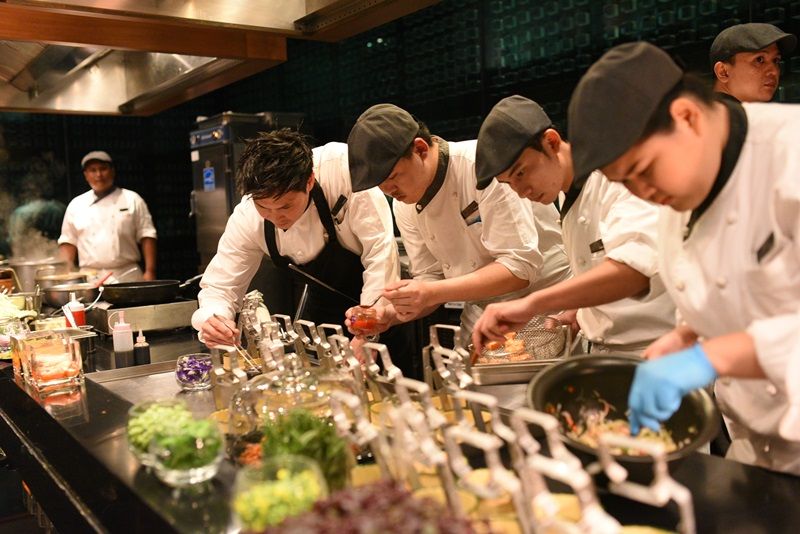
Perhaps the biggest advantage of fusion cuisine is the freedom to experiment.
A chef does not have to choose between traditional and international cooking.
Instead, they can ask questions such as:
- What happens when a Thai flavor is used in an international dish?
- Can a familiar Thai ingredient change the character of a Western-style preparation?
- How can a traditional sauce work with seafood or premium meat?
- Can a familiar dish be presented in a completely different format?
These questions create opportunities for experimentation.
The result does not always have to be dramatic.
Sometimes the most successful fusion dishes are relatively simple.
A familiar Thai flavor combined with a different protein can be enough to create something that feels new.
Other times, the change can be more obvious.
A traditional flavor profile might appear in pasta, a burger, a cocktail, or another international format.
This flexibility is one reason fusion cuisine continues to appear across modern restaurant menus.
Thai Fusion Food in Bangkok
Bangkok provides a particularly interesting environment for this style of cooking.
Thai cuisine already has an enormous range of ingredients and regional traditions.
At the same time, Bangkok has developed a strong international dining culture.
This creates opportunities for restaurants to combine local influences with global culinary ideas.
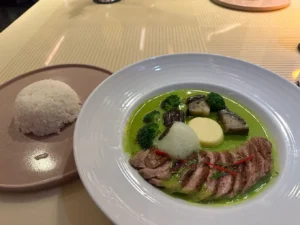
At Indulge, this can be seen in dishes such as Papilotte Salmon with tom yum bouillon.
Tom Yum is traditionally associated with a spicy and aromatic soup, but the restaurant uses the familiar flavor profile as part of a salmon preparation.
The result demonstrates how a Thai-inspired flavor can be transferred into a different style of dish.
The Spaghetti Khe Mao Seafood provides another example.
It combines Thai-style spicy stir-fried flavors with spaghetti, prawns, squid, and clams.
The format is international, while the seasoning draws on Thai culinary influences.
These examples show the difference between simply adding a Thai ingredient to a dish and creating a dish where the Thai influence is part of the overall concept.
Fusion Food Isn’t Limited to Main Courses
Fusion cuisine can appear throughout a restaurant menu.
It can influence starters, main courses, desserts, cocktails, and even breakfast.
This is particularly noticeable at restaurants that are designed around a broader dining experience.
At Indulge, Thai-inspired flavors appear alongside international dishes across different parts of the menu.
The Tom Yum Fries, for example, take the familiar flavor profile of Tom Yum and apply it to a comfort-food format.
The restaurant also offers dishes such as Red Curry Chicken Confit, combining chicken confit with Thai red curry flavors.
This type of approach gives diners a chance to explore Thai flavors without ordering a traditional Thai meal from beginning to end.
Why Diners Enjoy Fusion Cuisine
One reason fusion food works well for groups is variety.
Not everyone has the same taste preferences.
One person may want Thai-inspired flavors.
Another may prefer seafood.
Someone else may want steak, pasta, or a burger.
A restaurant with a fusion-oriented menu can accommodate those different preferences without requiring the group to visit several different restaurants.
This is one of the practical advantages of the concept.
At Indulge, for example, Thai-inspired dishes sit alongside seafood, premium beef, lamb, chicken, burgers, pasta, sharing plates, desserts, breakfast, brunch, and drinks.
This broad selection makes the fusion concept relevant not just from a culinary perspective, but also from a practical dining perspective.
Fusion Food and the Bangkok Dining Experience
For visitors, fusion cuisine can also be a useful introduction to Thai flavors.
Some travelers may be hesitant to order unfamiliar dishes.
A fusion menu can provide a middle ground.
They might recognize the main ingredient or format while discovering Thai herbs, sauces, spices, or flavor combinations at the same time.
For example, someone comfortable with pasta may be more willing to try a Thai-style spicy noodle dish.
Someone who enjoys seafood may be interested in prawns prepared with Thai red curry.
Someone who normally orders steak can explore Thai flavors through rib-eye Kra Phao.
This makes fusion dining particularly relevant to Bangkok’s international audience.
Thai Ingredients That Work Well in Fusion Cuisine
Thai cuisine has many ingredients that naturally lend themselves to modern interpretations.
Thai Basil
Thai basil provides a distinctive herbal aroma and works particularly well with beef, chicken, seafood, and stir-fried dishes.
Lemongrass
Lemongrass adds a fresh citrus-like aroma and can be used in food and drinks.
For a deeper look at this ingredient, explore our guide to lemongrass in Thai cuisine.
Chili
Chili brings heat and can be combined with rich, savory, sweet, or acidic flavors.
Lime
Lime adds acidity and freshness, making it particularly useful for balancing richer dishes.
Red Curry
Thai red curry provides a complex combination of chili, herbs, spices, and aromatics that can work with seafood, poultry, meat, and vegetables.
These ingredients give chefs a strong foundation for experimenting with international formats.
Fusion Cuisine and Cocktails
Fusion doesn’t stop at food.
Bangkok’s modern restaurant and cocktail scene also provides opportunities to combine local ingredients with international drinks.
At Indulge, the cocktail menu includes drinks incorporating Thai ingredients and flavors.
The Thai Basil Smash, for example, combines gin with lemon, lime, and Thai sweet basil.
This creates a connection between the food menu and the drinks menu.
The same type of ingredient that appears in Thai-inspired food can also become part of a contemporary cocktail.
If you are interested in the wider connection between Bangkok’s food and cocktail culture, explore our guide to the best cocktail bars in Bangkok.You can also explore the full Drinks menu at Indulge.
Fusion Food Doesn’t Have to Be Complicated
There is sometimes an assumption that fusion cuisine has to involve unusual combinations or elaborate presentation.
It doesn’t.
A successful fusion dish can be based on a very simple idea.
Take a familiar ingredient.
Use a different cooking technique.
Introduce a new sauce.
Combine a local flavor with an international format.
The important thing is whether the ingredients work together.
At its best, fusion cuisine should make diners curious.
You should be able to recognize something familiar while discovering something new.
That balance between familiarity and experimentation is one of the reasons fusion dining continues to evolve.
Exploring Fusion Dining at Indulge Bangkok
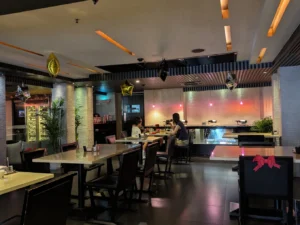
Indulge Fusion Food & Cocktail Bar is built around this combination of Thai-inspired flavors and international dining.
The menu includes Thai-inspired dishes such as Basil Leaf Kra Phao with Rib Eye Beef, Red Curry River Prawn, and Papilotte Salmon, while also offering seafood, steaks, burgers, pasta, sharing plates, desserts, cocktails, and other drinks.
This means diners can choose how much they want to explore.
You can order a dish strongly influenced by Thai cuisine, choose an international dish, or combine several styles across the same meal.
The Signature Mains section is a good starting point for exploring the restaurant’s main dishes.
For smaller plates designed to share, explore Starters & Sharing.
And if you want to see the restaurant’s complete selection, explore the Indulge menu.
Fusion Dining for Groups and Special Occasions
Fusion menus can also work particularly well for group dining.
Different people can choose different styles of food without making the restaurant experience feel disconnected.
One guest can order Thai-inspired seafood.
Another can choose beef.
Someone else can select pasta or a burger.
The group can still share starters and drinks before moving on to individual mains.
Indulge also offers private and group dining options for celebrations, corporate gatherings, and other occasions.
The Future of Fusion Food in Bangkok
Fusion cuisine continues to change because food itself continues to change.
Chefs have access to ingredients, techniques, and influences from around the world.
Diners are also more willing to experiment with food than ever before.
This does not mean traditional cuisine is disappearing.
Instead, traditional flavors can provide the foundation for new ideas.
Thai cuisine is particularly well suited to this because its ingredients are already highly distinctive.
Thai basil, chili, lime, lemongrass, curry pastes, coconut, herbs, and spices can add a recognizable character to dishes from many different culinary traditions.
This gives Bangkok’s chefs plenty of room to experiment while maintaining a connection to the city’s food culture.
Three Things That Make Fusion Food Interesting
After looking at the concept from different angles, three ideas stand out.
1. It creates new combinations
Fusion allows chefs to combine familiar ingredients and techniques in unexpected ways.
2. It connects different food cultures
Fusion dishes can bring together local ingredients and international influences, giving diners an opportunity to experience more than one culinary tradition.
3. It encourages experimentation
The format gives chefs room to reinterpret familiar dishes and develop new approaches to food.
These principles explain why fusion cuisine continues to appear in modern dining scenes around the world, including Bangkok.
Final Thoughts
Fusion food is not simply a passing trend.
Food has always evolved through the exchange of ingredients, techniques, and culinary traditions.
What makes modern fusion dining interesting is the opportunity to see those influences deliberately brought together on one menu.
In Bangkok, Thai ingredients provide an especially strong foundation for experimentation.
At Indulge Fusion Food & Cocktail Bar, Thai-inspired flavors appear alongside international dishes, seafood, premium beef, sharing plates, cocktails, desserts, and other dining options.
From Basil Leaf Kra Phao with Rib Eye Beef and Red Curry River Prawn to Papilotte Salmon and Spaghetti Khe Mao Seafood, the menu demonstrates different ways Thai influences can work within a contemporary dining experience.
If you want to explore fusion food in Bangkok, Indulge offers an opportunity to experience Thai-inspired flavors alongside international cuisine in one Sukhumvit dining destination.
Explore the Indulge menu and discover a modern approach to Thai-inspired fusion dining in Bangkok.